Review: Outline Mouse on a Teapot Alice Design
As an embroidery designer who has spent years translating digital art into thread, I approach every new machine embroidery design with a mix of curiosity and caution. We have all been there: downloading a file that looks stunning on screen but turns into a tangled mess of broken needles and puckered fabric once it hits the hoop. Recently, I evaluated the Outline Mouse on a Teapot Alice design, sourced from the Coloring Pages Amp collection, to determine its viability for real-world commercial and personal projects. This is not just a graphic; it is a potential asset for your craft business, provided you understand its structural nuances.
First Impressions and Visual Personality
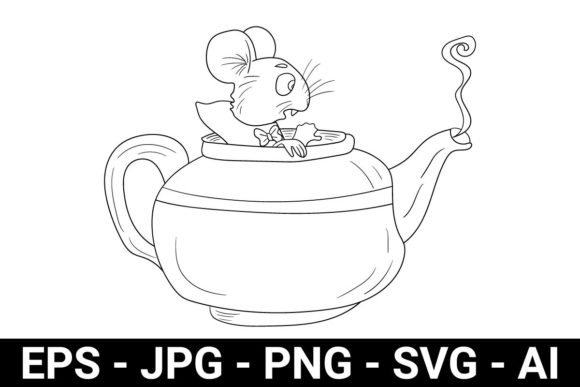
The immediate appeal of the Outline Mouse on a Teapot Alice lies in its whimsical narrative. Drawing from the rich visual language of Alice in Wonderland, the design captures a moment of fantasy that resonates with both children and adults who appreciate fairy tale aesthetics. The composition features a delicate mouse perched upon a classic teapot, rendered in clean lines that suggest movement and charm. For those of us in the Graphics and design space, the clarity of the outline is crucial. It avoids the clutter that often plagues themed designs, allowing the subject to breathe.
The mood is playful yet refined. It does not scream for attention with excessive density; instead, it invites the viewer to appreciate the simplicity of the form. This makes it an excellent candidate for projects where subtlety is valued over flashiness. Whether you are creating a personalized gift for a literature lover or adding a touch of magic to a nursery, the visual personality of this piece feels authentic rather than generic.
Real-World Application: The Tote Bag Test
To truly assess an embroidery file, I believe in putting it through a practical scenario. I chose to test this design on a heavy-weight canvas tote bag, a staple item for many Etsy sellers and small shop owners. Canvas provides a stable base, but it also reveals issues with stitch tension and registration. I selected a contrasting thread color to ensure the outline stood out against the natural fabric texture.
The result was promising. The running stitch elements, which define the primary shapes of the mouse and teapot, laid flat without significant gaping. Because the design relies heavily on outlines rather than dense fill stitch areas, it remained lightweight. This is a critical advantage for tote bags, which need to remain flexible and durable. Customers often reject items that feel stiff or board-like due to excessive stitching. This design respects the integrity of the fabric, making it a smart choice for handmade product lines that prioritize comfort and usability.
Versatility Across Product Lines
Beyond tote bags, the versatility of this design is one of its strongest assets. I can easily envision this working as a sweatshirt embroidery accent on the chest or sleeve. The scale is manageable, meaning it does not overwhelm the garment. For baby embroidery projects, such as bibs or onesies, the lack of dense saturation is beneficial. Babies have sensitive skin, and heavy stitching can cause irritation. An outline-based design like this minimizes contact area while maximizing visual impact.
For custom apparel decorators, this design offers a quick turnaround time. Since it lacks complex layering or intricate applique design requirements, it stitches out faster than traditional filled motifs. This efficiency is vital for craft business owners managing high volumes during holiday seasons. It also translates well to embroidered patch creation, where clean edges are necessary for cutting and sealing.
Technical Considerations and Limitations
While the design is charming, it is not without its challenges. As a reviewer, I must highlight where caution is needed. The reliance on thin lines means that stitch density must be carefully managed. If the density is too low, the fabric may show through, breaking the illusion of the line. If it is too high, the thread may bunch up, especially in the curved areas of the teapot spout or the mouse’s tail.
I would advise against using this design on highly textured fabrics like thick wool or loose-weave linen without proper stabilization. The fine details can get lost in the nap of the fabric. Similarly, on stretchy materials like jersey knits, a robust stabilizer is non-negotiable. Without it, the outline may distort during wear, turning a cute mouse into an abstract shape. For dark fabric backgrounds, ensure you choose thread colors with high contrast. A dark thread on a dark shirt will render the design invisible, negating its artistic value.
Another consideration is the hoop size. While the design is compact, placing it too close to seams or zippers can cause machine errors. Always map out your placement carefully, especially for cap embroidery, where the curved surface can distort linear designs if not hooped correctly with appropriate backing.
Enhancing Brand Value and Customer Trust
In the competitive world of small shop product sales, presentation is everything. The Outline Mouse on a Teapot Alice contributes to a perception of quality because it looks intentional and clean. It does not appear mass-produced or sloppy. When customers see precise stitching and thoughtful design choices, their trust in your brand increases. This design supports brand consistency for shops focusing on literary, fantasy, or whimsical themes.
Furthermore, the design’s adaptability allows for creative marketing. You can use it in printable mockup previews to show potential buyers how it looks on different items. This helps manage customer expectations and reduces return rates. For holiday embroidery collections, pairing this design with seasonal colors can create limited-edition items that drive engagement.
Practical Designer Notes for Implementation
Before committing to a large production run, follow these steps to ensure success with this digital embroidery file:
- Test on Scrap Fabric: Always stitch a sample on the exact fabric type you intend to use. This reveals any tension issues or registration errors.
- Check Thread Contrast: View your design in black and white to ensure the lines remain distinct regardless of color choice.
- Verify File Formats: The ZIP folder contains AI, EPS, SVG, PNG, JPG, and FLA files. Ensure you are using the correct embroidery format for your machine, which may require conversion software if a native DST or PES file is not explicitly listed.
- Inspect Small Details: Zoom in on the mouse’s features. If certain lines are too thin for your needle size, consider simplifying or adjusting the digitizing settings.
- Confirm Licensing: Before selling finished items or using this in commercial embroidery projects, verify the license terms provided by Coloring Pages Amp. Understanding usage rights protects your business legally.
In conclusion, the Outline Mouse on a Teapot Alice is a solid addition to any designer’s library. It balances aesthetic charm with technical practicality, making it suitable for a wide range of embroidery project types. By respecting its limitations and leveraging its strengths, you can create finished product items that delight customers and stand the test of time. It is a reminder that sometimes, less is more, and a simple outline can tell a powerful story.