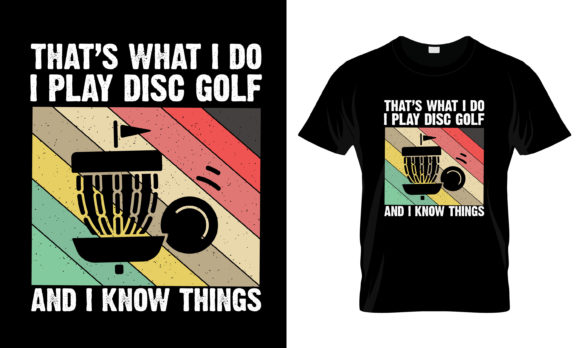
Reviewing That s What I Do I Play Disc T-Shirt for Embroidery
As an embroidery designer who has spent years digitizing patterns and testing them on everything from stiff denim to delicate baby knits, I approach every new design with a critical eye. We are not just looking at pretty pictures; we are looking at stitch paths, density, and usability. Recently, I evaluated the That s What I Do I Play Disc T-Shirt design to see if it holds up in real-world production. This is not just a graphic; it is a potential asset for your craft business, and understanding its practical application is key to selling successful handmade products.
First Impressions and Visual Personality
The first thing that strikes you about That s What I Do I Play Disc T-Shirt is its bold, declarative nature. It taps into the passionate subculture of disc golfers, a demographic that loves to wear their hobby on their sleeve—literally. The layout is straightforward, which is often a blessing in embroidery. Complex gradients and tiny details can turn into a mess of thread breaks and bird nests, but this design relies on strong shapes and clear typography.
The mood is playful yet confident. It creates an immediate connection with the viewer, making it an excellent choice for personalized gifts or boutique merchandise. When I visualize this as a finished product, I see it working best on casual apparel. It does not try to be overly ornate; instead, it focuses on readability and impact. For an Etsy seller or small shop owner, this clarity is vital because it translates well across different fabric colors and textures without losing its identity.
Real-World Application: The Custom Sweatshirt Test
To truly understand how a design performs, you must imagine it in a specific project scenario. I recently considered using this concept for a custom order: a set of matching sweatshirts for a local disc golf club’s tournament. The client wanted something durable, washable, and visually striking from a distance.
In this context, That s What I Do I Play Disc T-Shirt shines. On a mid-weight cotton blend sweatshirt, the design has enough presence to stand out without requiring excessive stitch density that might make the garment stiff. I envisioned using a satin stitch for the text elements to give them a smooth, professional sheen, while potentially using a fill stitch for any graphical icons included in the broader theme. The result would be a high-quality embroidered patch feel that adds perceived value to the garment.
This type of machine embroidery design is versatile. It works equally well on a tote bag design for carrying discs, a cap for sunny days on the course, or even a kitchen towel for the enthusiast who lives and breathes the sport. The key is matching the scale of the design to the hoop size. For a sweatshirt chest placement, a 4x4 or 5x7 hoop is usually sufficient, ensuring the text remains legible without becoming too large and overwhelming the wearer.
Navigating Fabric and Stitch Challenges
While the design is robust, no digital embroidery file is immune to the physics of thread and fabric. Here is where practical experience matters. If you plan to use That s What I Do I Play Disc T-Shirt on stretchy fabrics like performance tees or thin jersey, you must be cautious. High stitch density can cause puckering, distorting the text and ruining the aesthetic.
I recommend using a cut-away stabilizer for stretchy materials to provide long-term support, especially if the finished product will be washed frequently. For woven fabrics like canvas tote bags or aprons, a tear-away stabilizer might suffice, but always test on scrap fabric first. This step is non-negotiable for professional embroidery projects. You need to check thread color contrast against your base material. A light thread on a dark fabric may require an underlay stitch to prevent the background from showing through, which can affect the crispness of the final look.
Another consideration is curved surfaces. If you are embroidering this onto a cap, the curvature can distort straight lines. You may need to adjust the pull compensation in your digitizing software or choose a design variant that accounts for this distortion. Always inspect small details and corners. Sharp corners in text can lead to thread buildup or breaks if the needle penetration is too dense in one spot.
Commercial Viability and Brand Consistency
For creative entrepreneurs and digital product sellers, the commercial potential of That s What I Do I Play Disc T-Shirt is significant. It fits neatly into the niche of sports-themed humor, which consistently performs well on platforms like Etsy. However, before listing it as a design asset or selling finished items, you must confirm licensing terms. The product description mentions it comes as SVG, EPS, and PNG files, which are typically used for print templates and graphics.
It is crucial to note that SVG and EPS files are vector-based and ideal for screen printing or heat transfer vinyl, but they are not native machine embroidery formats like PES or DST. If you are an embroidery designer, you will need to digitize these graphics yourself or ensure you have the correct embroidery file version. Using a print template directly for embroidery without proper digitizing will result in poor quality. Always verify if the provider offers a true machine embroidery design file or if you are purchasing graphics intended for other crafts.
Assuming you have the correct embroidery file, this design enhances brand consistency for shops specializing in outdoor or sports apparel. It signals to customers that you understand their lifestyle. The "funny gift" angle makes it highly shareable, increasing buyer engagement. When customers see a well-executed embroidered item, it builds trust in your craftsmanship. A clean, well-stitched design suggests professionalism, whereas a messy, puckered one can damage your reputation.
Practical Designer Notes for Best Results
To get the most out of That s What I Do I Play Disc T-Shirt, follow these practical steps:
- Test on Scrap Fabric: Never run a new design on your final garment without a test stitch-out. Check for thread breaks and tension issues.
- Check Thread Colors: Use high-quality polyester or rayon threads for a vibrant finish. Ensure there is enough contrast between the thread and the fabric texture.
- Review Stitch Density: If the design feels too heavy, consider reducing the density in your editing software to prevent stiffness.
- Confirm Hoop Size: Ensure the design fits comfortably within your machine’s hoop, leaving room for stabilization.
- Inspect Small Details: Zoom in on the digitized file to check for unnecessary jump stitches or tight turns that could cause issues.
- Mockup Testing: Create black and white mockups to see how the design reads without color distraction. This helps assess balance and spacing.
- Licensing Verification: Double-check if the license allows for commercial use of finished products or if it is for personal use only. This is critical for Etsy sellers and small business owners.
In conclusion, That s What I Do I Play Disc T-Shirt is a strong candidate for various embroidery projects, from custom apparel to holiday embroidery gifts. Its strength lies in its simplicity and relatability. By paying attention to fabric choice, stabilizer selection, and proper digitizing practices, you can transform this graphic into a high-value handmade product. Whether you are creating a personalized gift for a friend or stocking your small shop with unique merchandise, this design offers a solid foundation for creative expression. Just remember, the difference between a good product and a great one often lies in the technical execution and the care taken during the stitching process.