Funny Monster Character Clipart: A Designer’s Review
As a designer who spends half my life staring at stitch previews and the other half troubleshooting thread breaks, I have learned to be skeptical of generic digital assets. We all know the struggle of finding a machine embroidery design that looks cute on screen but turns into a tangled mess of satin stitches on fabric. Recently, I came across Funny Monster Character Clipart, marketed primarily as vector icons and high-resolution PNGs. While this is technically a graphic asset rather than a native embroidery file, its potential for adaptation in our craft is significant. Here is my honest take on how this character holds up when translated from pixel to thread.
First Impressions and Visual Personality
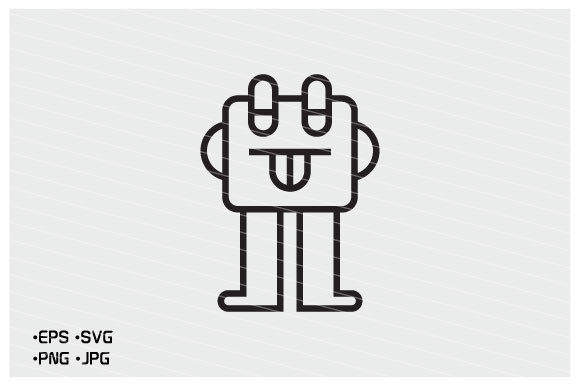
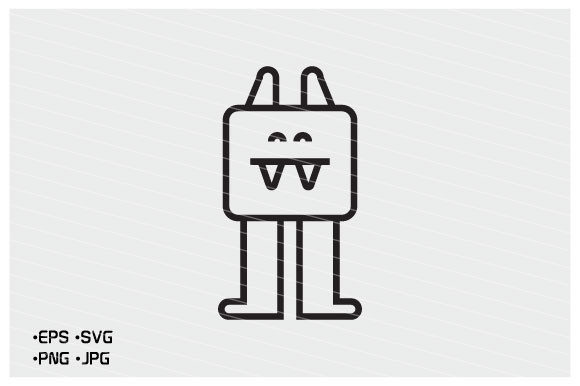
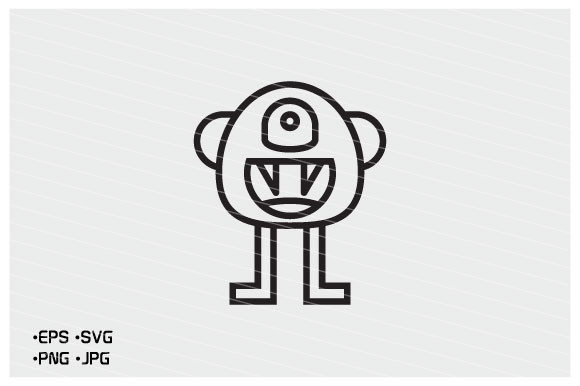
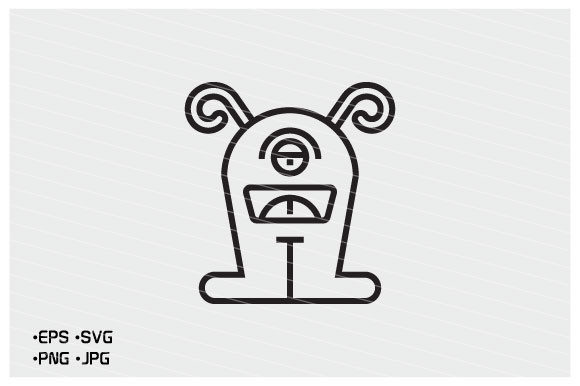
The immediate appeal of Funny Monster Character Clipart lies in its simplicity. In the world of Icons and Graphics, less is often more, especially when you are planning to stitch it out. The character features bold, clean lines and a playful expression that reads well even from a distance. For an embroidery designer, this is crucial. Complex gradients and tiny details get lost in translation, but strong silhouettes survive the needle.
The mood is lighthearted and whimsical, making it an ideal candidate for projects targeting children or adults who appreciate quirky humor. It does not try to be realistic; instead, it leans into a stylized aesthetic that works beautifully for custom apparel and personalized gifts. When I first viewed the high-resolution PNG on a transparent background, I noticed the edges were crisp. This clarity is vital if you plan to use the image as a reference for digitizing your own embroidery file or if you are using it for printable mockups to show clients before stitching.
Real-World Application: The Tote Bag Test
To truly evaluate any design, you have to imagine it on a physical product. I visualized this monster on a canvas tote bag design. Canvas has a distinct weave, and lighter fabrics can sometimes show the stabilizer through the stitches if the density is too low. However, because this character relies on bold shapes, it would likely perform well with a combination of fill stitch for the body and satin stitch for the outlines or eyes.
I also considered it for a sweatshirt embroidery project. Fleece and cotton blends are forgiving, but they eat up small details. The monster’s large facial features would remain visible and charming on a thick hoodie, whereas a more intricate design might disappear into the pile. For Etsy sellers and small shop product creators, this versatility is a selling point. You can offer the same design on a baby onesie, a cap, or a kitchen towel without needing to completely redraw the artwork for each substrate.
Considerations for Challenging Fabrics
While the design is robust, there are areas where caution is needed. If you are working with stretchy fabric, such as jersey for t-shirts, the stability of the shape becomes critical. Without proper stabilizer support, the monster could distort during washing. Additionally, if you are attempting to scale this down for a small hoop size, such as a 4x4 inch hoop for a collar or cuff, you must check the stitch density. Dense areas in the original graphic might need to be simplified to prevent puckering.
Dark fabrics present another challenge. Since the clipart is likely colorful, you need to ensure your thread colors have enough contrast against black or navy materials. A quick test in black and white mockups can reveal if the design loses its definition when color is removed. If the monster relies solely on color to distinguish its features, it may fail on monochrome garments unless you adjust the stitch types to create texture-based contrast.
Digital Assets vs. Stitch Files
It is important to clarify what Funny Monster Character Clipart is not. It is not a pre-digitized digital embroidery file ready to load into your machine. It is a vector icon and PNG graphic. For many craft business owners, this is actually an advantage. It allows you to customize the colors and size infinitely before digitizing. You can create unique variations for different seasons, turning a standard monster into a holiday embroidery theme by adding a Santa hat or pumpkin accessories.
However, this requires skill. If you are not a digitizer, you will need to convert this graphic into a stitch file using software. During this process, pay attention to running stitch placements for underlay and ensure that any applique design elements are properly aligned if you choose to use fabric patches instead of full stitching. Always verify the license terms. Just because a graphic is editable does not mean it is free for commercial use in finished goods. Check whether the creator allows you to sell items made with their design assets.
Enhancing Product Value and Brand Consistency
Using consistent, high-quality graphics like this monster can elevate your brand. Customers trust handmade products that look professional. A blurry or poorly stitched image suggests carelessness, while a clean, well-executed monster suggests quality. This clipart helps maintain brand consistency across your commercial embroidery line. Whether you are selling embroidered patch sets or custom baby embroidery items, the recognizable character can become a signature element of your shop.
For printable mockup creation, the transparent PNG is invaluable. You can place the monster on various product photos to gauge customer interest before committing to production. This reduces waste and helps you curate your inventory based on real data. It is a smart tool for any creative entrepreneur looking to minimize risk.
Practical Designer Notes
Before you commit to a full production run, follow these steps:
- Test on scrap fabric: Always stitch a sample on the exact material you plan to use for the final product.
- Check thread contrast: Ensure your chosen thread colors pop against the fabric background.
- Review stitch density: If digitizing yourself, avoid overly dense fills that can cause stiffness or puckering.
- Confirm hoop size: Make sure the design fits comfortably within your machine’s maximum area with room for framing.
- Inspect small details: Zoom in on the vector file to see if any lines are too thin to stitch reliably.
- Use proper stabilizer: Match the stabilizer weight to the fabric type to prevent distortion.
- Verify licensing: Confirm that the license permits commercial use for physical goods if you plan to sell them.
In conclusion, Funny Monster Character Clipart is a versatile asset for the modern maker. It bridges the gap between digital design and tactile craft. While it requires some technical knowledge to convert into a stitch-ready format, the payoff is a customizable, engaging design that resonates with customers. For handmade product creators who value uniqueness and quality, this graphic offers a solid foundation for memorable embroidery project outcomes.